All Hallows and All Souls
By Lauren Gilbert
At this time of year, around the world, people celebrate in remembrance for the dead: specifically deceased saints and deceased loved ones. Tonight, we will be celebrating Halloween. In the United States, and many other western nations, this has become a secular holiday, full of games, sweet treats, costumes and fun. However, it is still celebrated as a religious tradition and has deep historical roots.
In the CONCISE OXFORD ENGLISH DICTIONARY, “Hallow” is defined as follows: verb-to make holy or consecrate; noun-archaic word for a saint or holy person. Pope Gregory IV extended a holiday to the whole Catholic Church in 835 AD to honor all of the saints, known and unknown, which was called All Saints Day, on November 1. This was and is a holy day of obligation in the Catholic church, and attendance at mass was required. This day was also known as All Hallows Day. As with many Christian holidays, it absorbed an earlier, non-Christian holiday, the ancient Celtic holiday, Samhain, which fell at roughly the same time.
As with other Catholic days of obligation, the evening before is the start of the celebration, or vigil. Therefore, the evening of October 31 became All Hallows Eve, or All Hallows Even. This is the root of Hallowe’en (now Halloween), the first known usage of which occurred about 1700. Samhain was an ancient Celtic and Gaelic holiday celebrated on the night before their New Year, which roughly coincides with October 31. On this night, the division between the living and the dead becomes blurred. Celtic customs included bonfires (and sacrifices) and wearing costumes to ward off spirits.
In 1000 AD, the feast of All Souls was established on November 2 by the Catholic Church. On this day, the office of the dead was read, and all of the faithful who had died and were in purgatory were remembered. During the service, survivors could have the names of their deceased loved ones read upon request. It was thought that the spirits of the dead returned to visit their homes, and candles were lit to guide them. Before the Reformation, poor Christians would beg for money or food, offering prayers for the dead in exchange. In England, by the 19th century, this morphed into a tradition called “souling” where children would sing a specific song for money or soul cakes.
You can see the words of the song and a modern recipe for the cakes HERE. http://projectbritain.com/year/november.htm
The modern celebration of Halloween as a secular holiday has embraced the costumes, the bonfires and candles, and the requests for “treats” from the pagan and early Christian traditions, while losing (or ignoring) the religious solemnity.
All Saints Day and All Souls Day are both still celebrated today, not only by the Catholic Church, but by other Christian denominations including the Church of England. The Book of Common Prayer contains this collect for All Saints Day: God, who hast knit together thine elect in one communion and fellowship, in the mystical body of thy Son Christ our Lord: Grant us grace so to follow thy blessed Saints in all virtuous and godly living, that we may come to those unspeakable joys, which thou hast prepared for them that unfeignedly love thee; through Jesus Christ our Lord.
On All Souls Day, the Church of England celebrates the Eucharist of the Commemoration of the Faithful Departed. While it is fun to celebrate Halloween as a secular event, it is important to remember the history and roots of the celebration.
CONCISE OXFORD ENGLISH DICTIONARY.11th edition. Oxford University Press, Oxford NY © 2008, Pg. 644
ABOUT.COM/Catholicism. Richert, Scott P. All Souls Day. http://catholicism.about.com/od/holydaysandholidays/p/All_Souls_Day.htm
Catholic Encyclopedia online New Advent: http://www.newadvent.org/cathen/01315a.htm (All Saints Day)
Catholic Encyclopedia online-New Advent: http://www.newadvent.org/cathen/01315b.htm (All Souls Day)
Church of England website. The Book of Common Prayer. http://www.churchofengland.org/prayer-worship/worship/book-of-common-prayer/collects-epistles-and-gospels/all-saints'-day.aspx
Project Britain Website; Project Britain Folklore Calendar. Facts about November. http://projectbritain.com/year/november.htm
History.com (The History Channel online).Origins of Halloween. http://www.history.com/topics/halloween
Image from Wikimedia. org http://upload.wikimedia.org/wikipedia/commons/f/f8/Book_of_Hallowe%27en.jpg
Merriam-Webster online. http://www.merriam-webster.com/dictionary/halloween
The Telegraph Online. Chivers, Tom. Hallowe'en: a history of All Hallows' Eve, from Samhain to trick-or-treat. http://www.telegraph.co.uk/news/uknews/6468637/Halloween-a-history-of-All-Hallows-Eve-from-Samhain-to-trick-or-treat.html
The Telegraph Online. Ross, Tim. Churches attempt to take the ‘dark side’ out of Hallowe’en. 10/31/09 http://www.telegraph.co.uk/news/uknews/8097043/Churches-attempt-to-take-the-dark-si
Lauren Gilbert lives in Florida, and is the author of HEYERWOOD: A Novel. You can find out more about the novel at http://www.heyerwood.com

By Lauren Gilbert
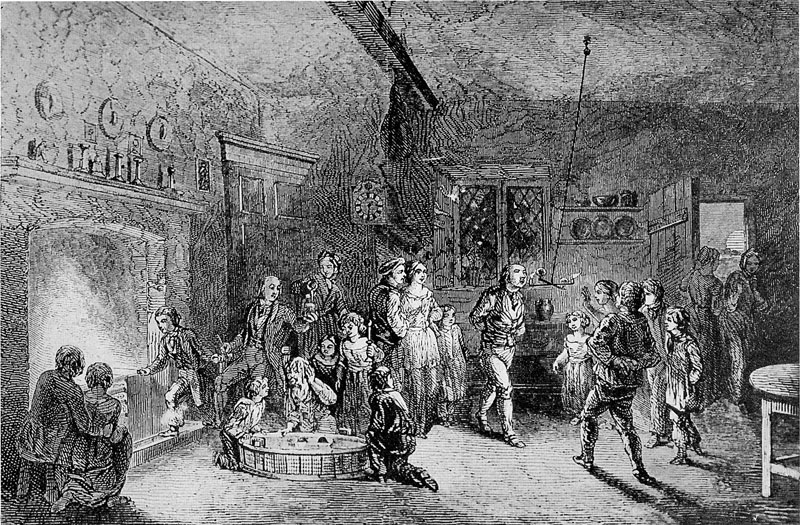 |
| From The Book of Hallowe'en 1919 |
At this time of year, around the world, people celebrate in remembrance for the dead: specifically deceased saints and deceased loved ones. Tonight, we will be celebrating Halloween. In the United States, and many other western nations, this has become a secular holiday, full of games, sweet treats, costumes and fun. However, it is still celebrated as a religious tradition and has deep historical roots.
In the CONCISE OXFORD ENGLISH DICTIONARY, “Hallow” is defined as follows: verb-to make holy or consecrate; noun-archaic word for a saint or holy person. Pope Gregory IV extended a holiday to the whole Catholic Church in 835 AD to honor all of the saints, known and unknown, which was called All Saints Day, on November 1. This was and is a holy day of obligation in the Catholic church, and attendance at mass was required. This day was also known as All Hallows Day. As with many Christian holidays, it absorbed an earlier, non-Christian holiday, the ancient Celtic holiday, Samhain, which fell at roughly the same time.
As with other Catholic days of obligation, the evening before is the start of the celebration, or vigil. Therefore, the evening of October 31 became All Hallows Eve, or All Hallows Even. This is the root of Hallowe’en (now Halloween), the first known usage of which occurred about 1700. Samhain was an ancient Celtic and Gaelic holiday celebrated on the night before their New Year, which roughly coincides with October 31. On this night, the division between the living and the dead becomes blurred. Celtic customs included bonfires (and sacrifices) and wearing costumes to ward off spirits.
In 1000 AD, the feast of All Souls was established on November 2 by the Catholic Church. On this day, the office of the dead was read, and all of the faithful who had died and were in purgatory were remembered. During the service, survivors could have the names of their deceased loved ones read upon request. It was thought that the spirits of the dead returned to visit their homes, and candles were lit to guide them. Before the Reformation, poor Christians would beg for money or food, offering prayers for the dead in exchange. In England, by the 19th century, this morphed into a tradition called “souling” where children would sing a specific song for money or soul cakes.
You can see the words of the song and a modern recipe for the cakes HERE. http://projectbritain.com/year/november.htm
The modern celebration of Halloween as a secular holiday has embraced the costumes, the bonfires and candles, and the requests for “treats” from the pagan and early Christian traditions, while losing (or ignoring) the religious solemnity.
All Saints Day and All Souls Day are both still celebrated today, not only by the Catholic Church, but by other Christian denominations including the Church of England. The Book of Common Prayer contains this collect for All Saints Day: God, who hast knit together thine elect in one communion and fellowship, in the mystical body of thy Son Christ our Lord: Grant us grace so to follow thy blessed Saints in all virtuous and godly living, that we may come to those unspeakable joys, which thou hast prepared for them that unfeignedly love thee; through Jesus Christ our Lord.
On All Souls Day, the Church of England celebrates the Eucharist of the Commemoration of the Faithful Departed. While it is fun to celebrate Halloween as a secular event, it is important to remember the history and roots of the celebration.
CONCISE OXFORD ENGLISH DICTIONARY.11th edition. Oxford University Press, Oxford NY © 2008, Pg. 644
ABOUT.COM/Catholicism. Richert, Scott P. All Souls Day. http://catholicism.about.com/od/holydaysandholidays/p/All_Souls_Day.htm
Catholic Encyclopedia online New Advent: http://www.newadvent.org/cathen/01315a.htm (All Saints Day)
Catholic Encyclopedia online-New Advent: http://www.newadvent.org/cathen/01315b.htm (All Souls Day)
Church of England website. The Book of Common Prayer. http://www.churchofengland.org/prayer-worship/worship/book-of-common-prayer/collects-epistles-and-gospels/all-saints'-day.aspx
Project Britain Website; Project Britain Folklore Calendar. Facts about November. http://projectbritain.com/year/november.htm
History.com (The History Channel online).Origins of Halloween. http://www.history.com/topics/halloween
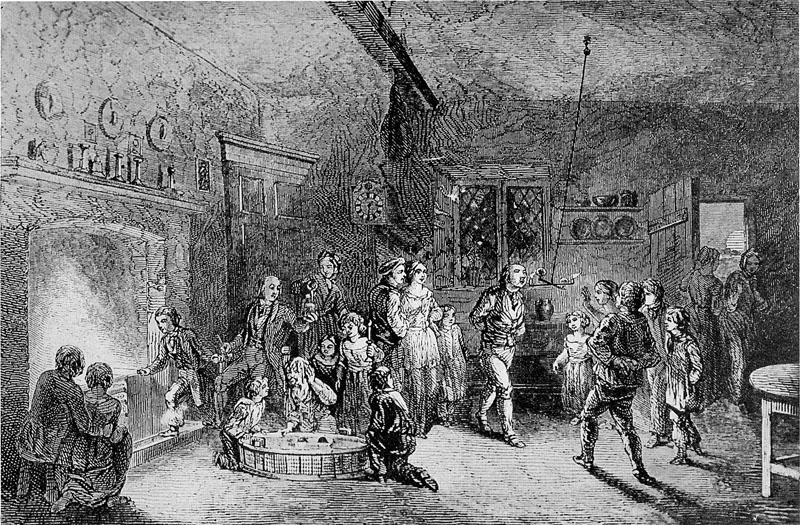
Image from Wikimedia. org http://upload.wikimedia.org/wikipedia/commons/f/f8/Book_of_Hallowe%27en.jpg
Merriam-Webster online. http://www.merriam-webster.com/dictionary/halloween
The Telegraph Online. Chivers, Tom. Hallowe'en: a history of All Hallows' Eve, from Samhain to trick-or-treat. http://www.telegraph.co.uk/news/uknews/6468637/Halloween-a-history-of-All-Hallows-Eve-from-Samhain-to-trick-or-treat.html
The Telegraph Online. Ross, Tim. Churches attempt to take the ‘dark side’ out of Hallowe’en. 10/31/09 http://www.telegraph.co.uk/news/uknews/8097043/Churches-attempt-to-take-the-dark-si
Lauren Gilbert lives in Florida, and is the author of HEYERWOOD: A Novel. You can find out more about the novel at http://www.heyerwood.com


Comments
Post a Comment